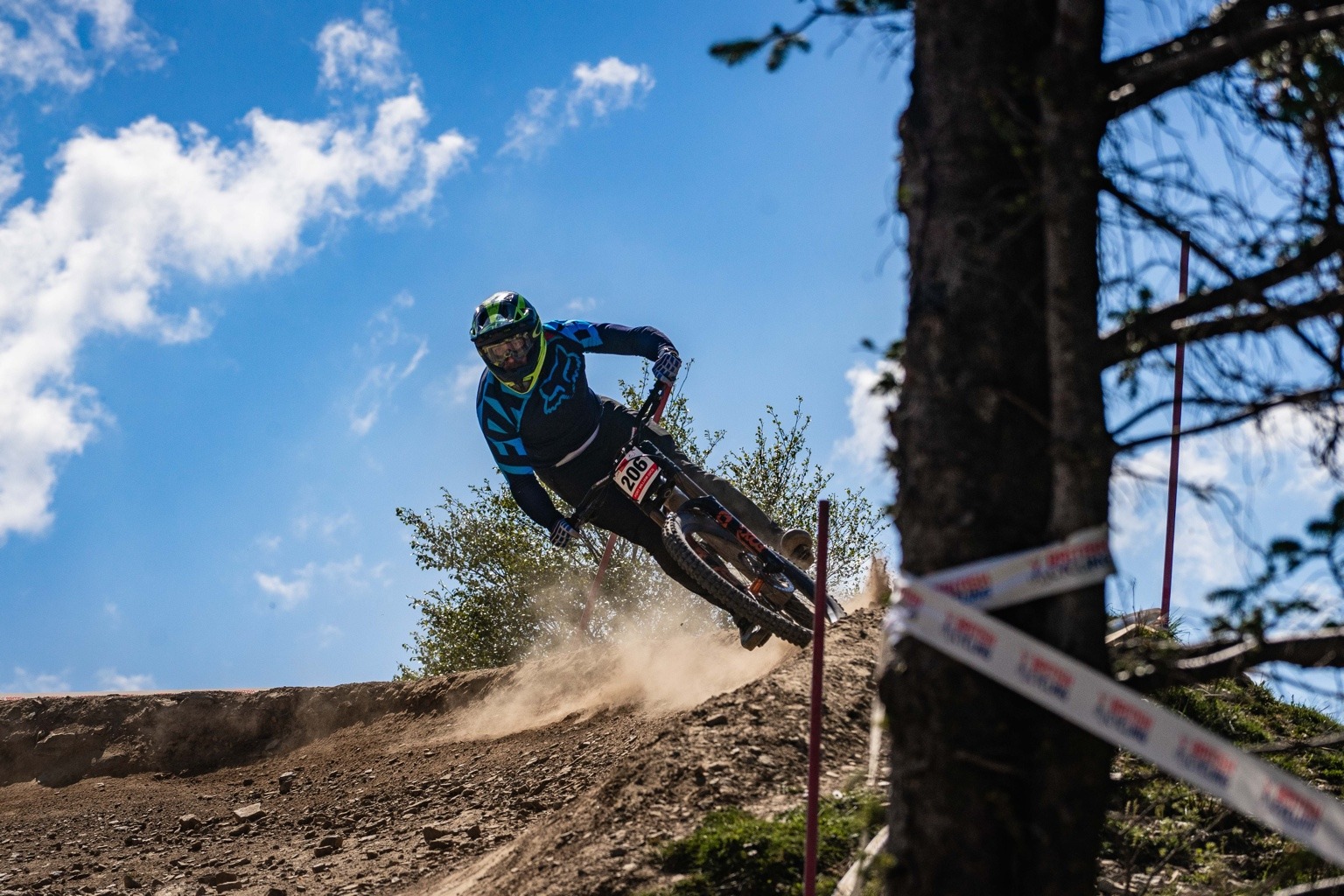
Rider Assessment
Structured evaluation of technique, decision-making, physical capacity and rider mindset — the things that move before the bike does.
 COUPLED SYSTEMS
EMBODIED PERFORMANCE
COUPLED SYSTEMS
EMBODIED PERFORMANCE
SYSTEMS · DATA · HUMAN PERFORMANCE
Rider, machine, terrain and decision-making are inseparable. Coupled Systems works with competitive gravity athletes to make that system legible — through assessment, data analysis, setup and structured coaching.
Start a conversationAPPROACH
Most coaching addresses technique. Most setup work addresses the bike. Neither alone explains why a rider is fast on one track and not another, or why a change that should help, doesn't. Coupled Systems works across both, with data as evidence and feel as the goal.
Structured evaluation of technique, decision-making, physical capacity and rider mindset — the things that move before the bike does.
On-bike data connected back to what the rider felt, the terrain they rode, and the decisions they made. Numbers as evidence, not decoration.
Suspension, geometry and maintenance decisions grounded in measurement, kinematics and rider feedback — not internet consensus.
Practical feedback, season planning and progression that respects how riders actually improve: incrementally, and under load.
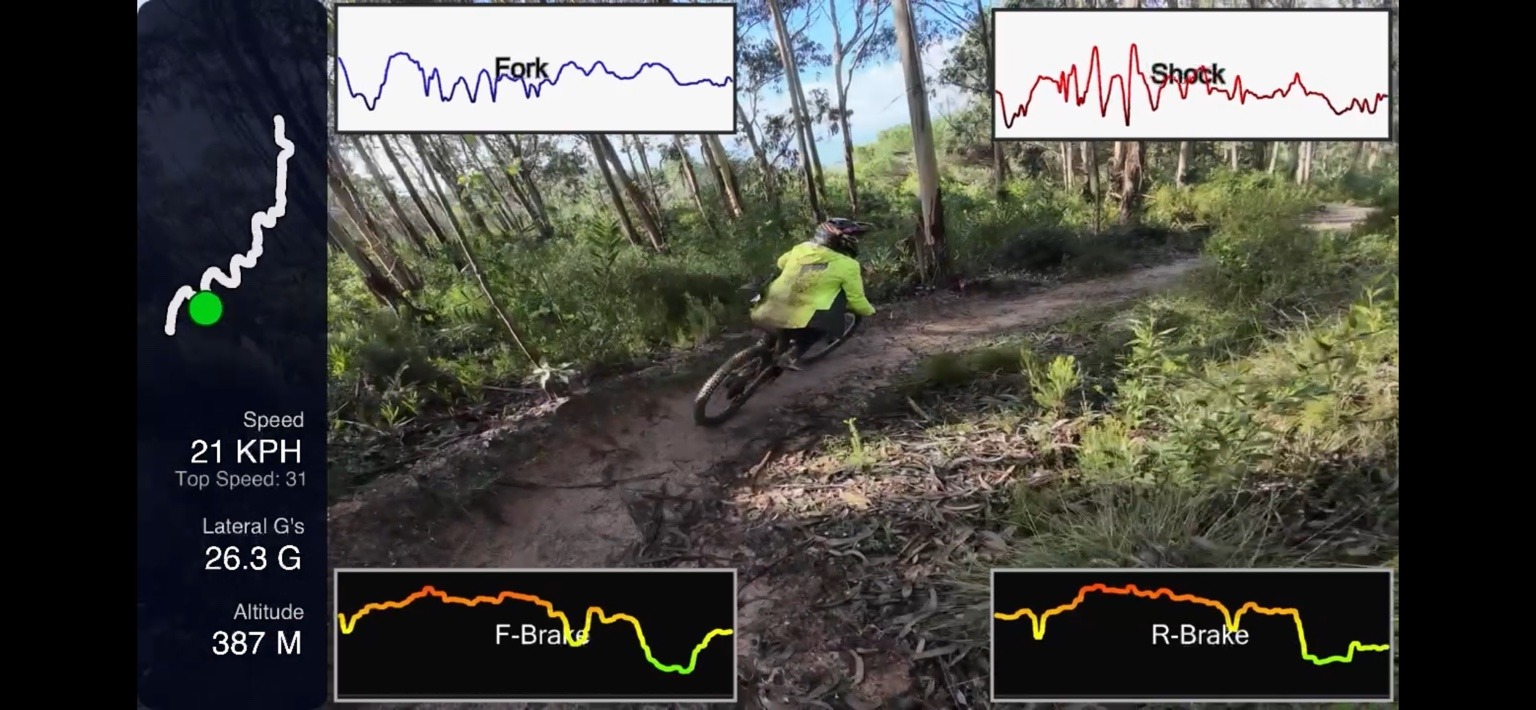
DATA & VIDEO ANALYSIS
Data becomes useful when it is tied back to rider behaviour, terrain interaction, braking, suspension response and decision-making. Video and on-bike data are reviewed together so observations have somewhere to land.
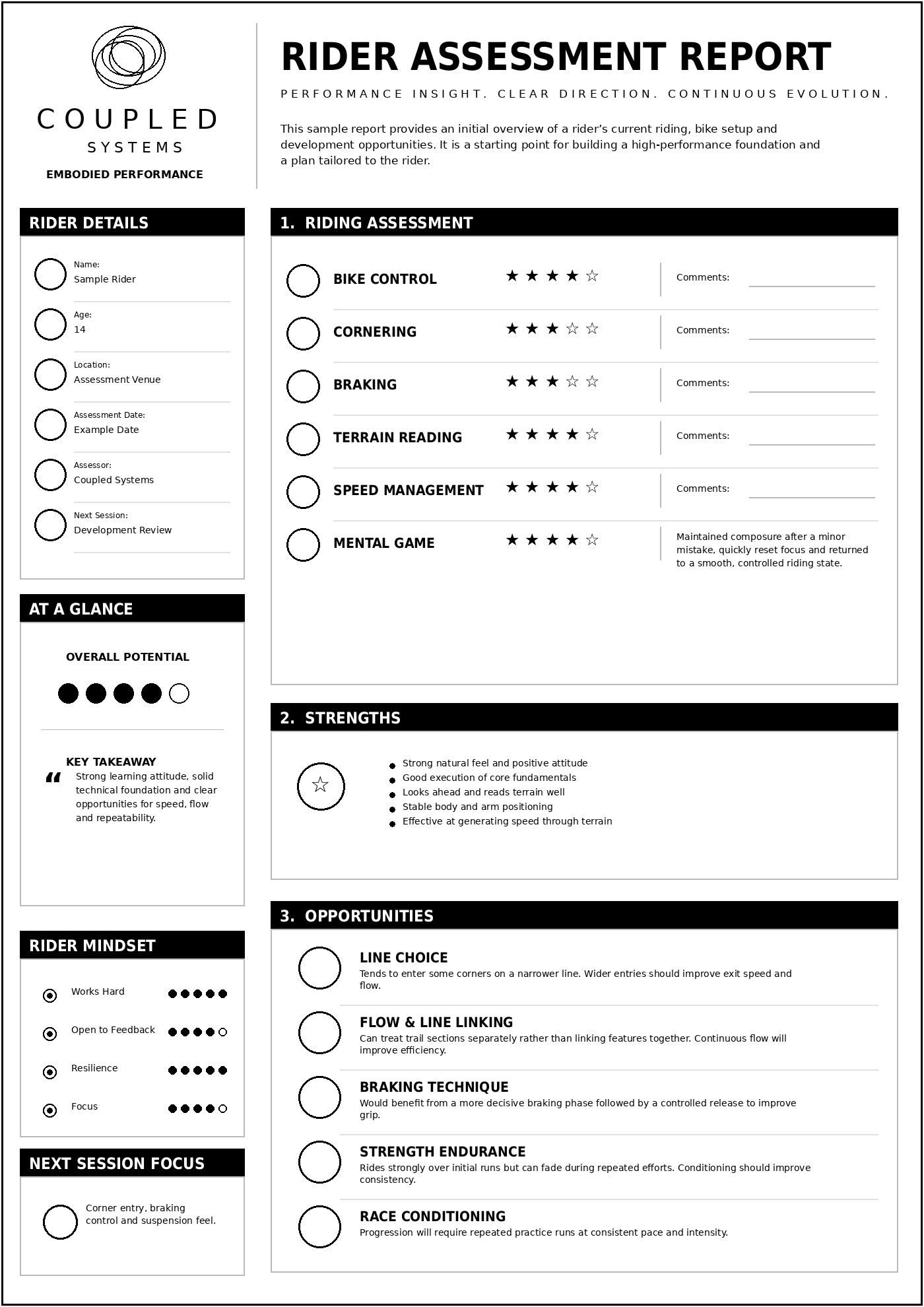
RIDER ASSESSMENT REPORTS
Technical observation, setup notes, psychological insight and practical progression goals — presented in a format the rider can refer back to between sessions and across a season.
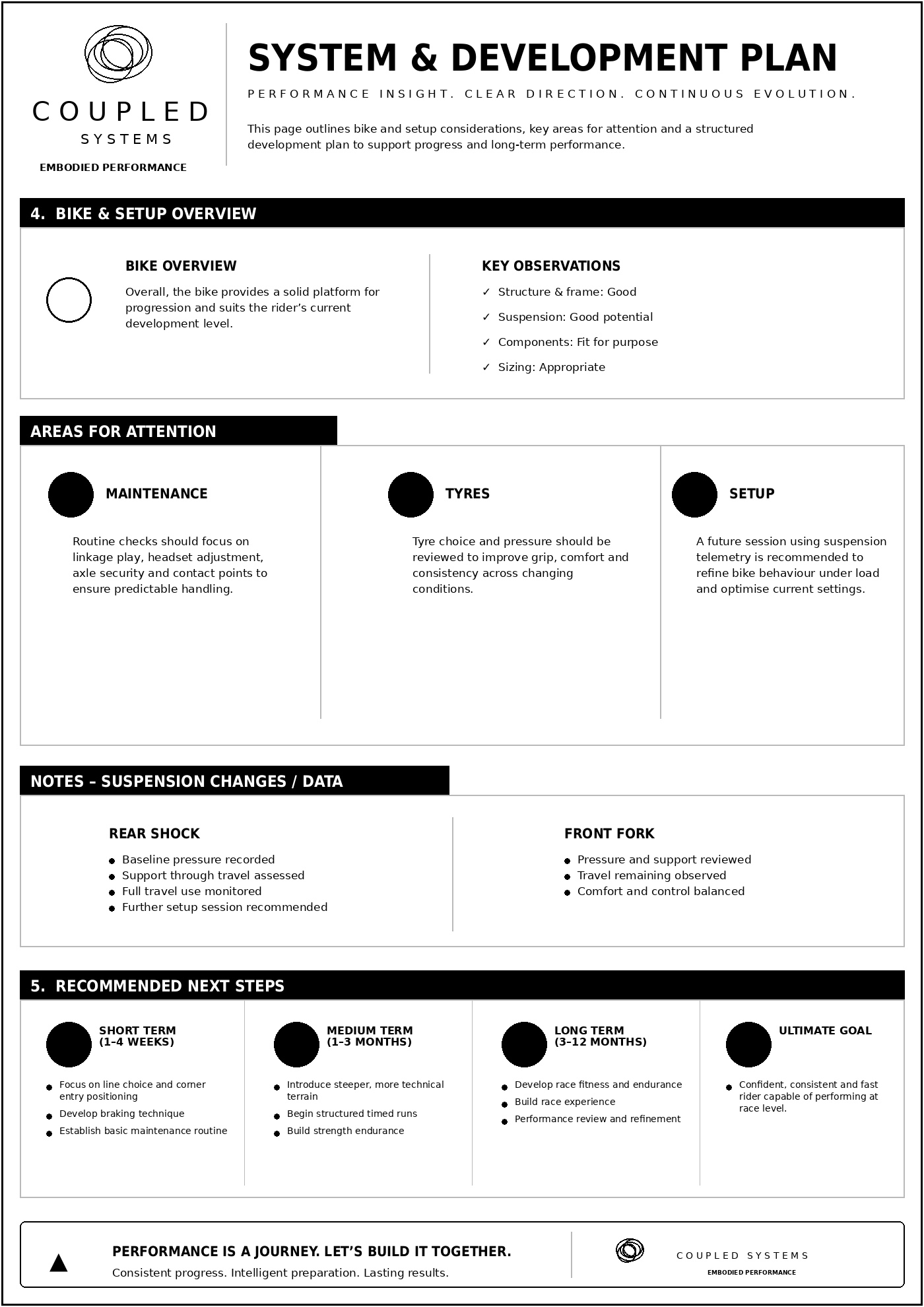
SYSTEM MODELLING
On-bike data shows what the suspension actually did. Kinematic modelling shows what it was capable of. Comparing the two reveals where setup is limiting the rider — and where the rider is limiting the setup. Data becomes useful only when it translates into a setup change the rider can feel on the next run.
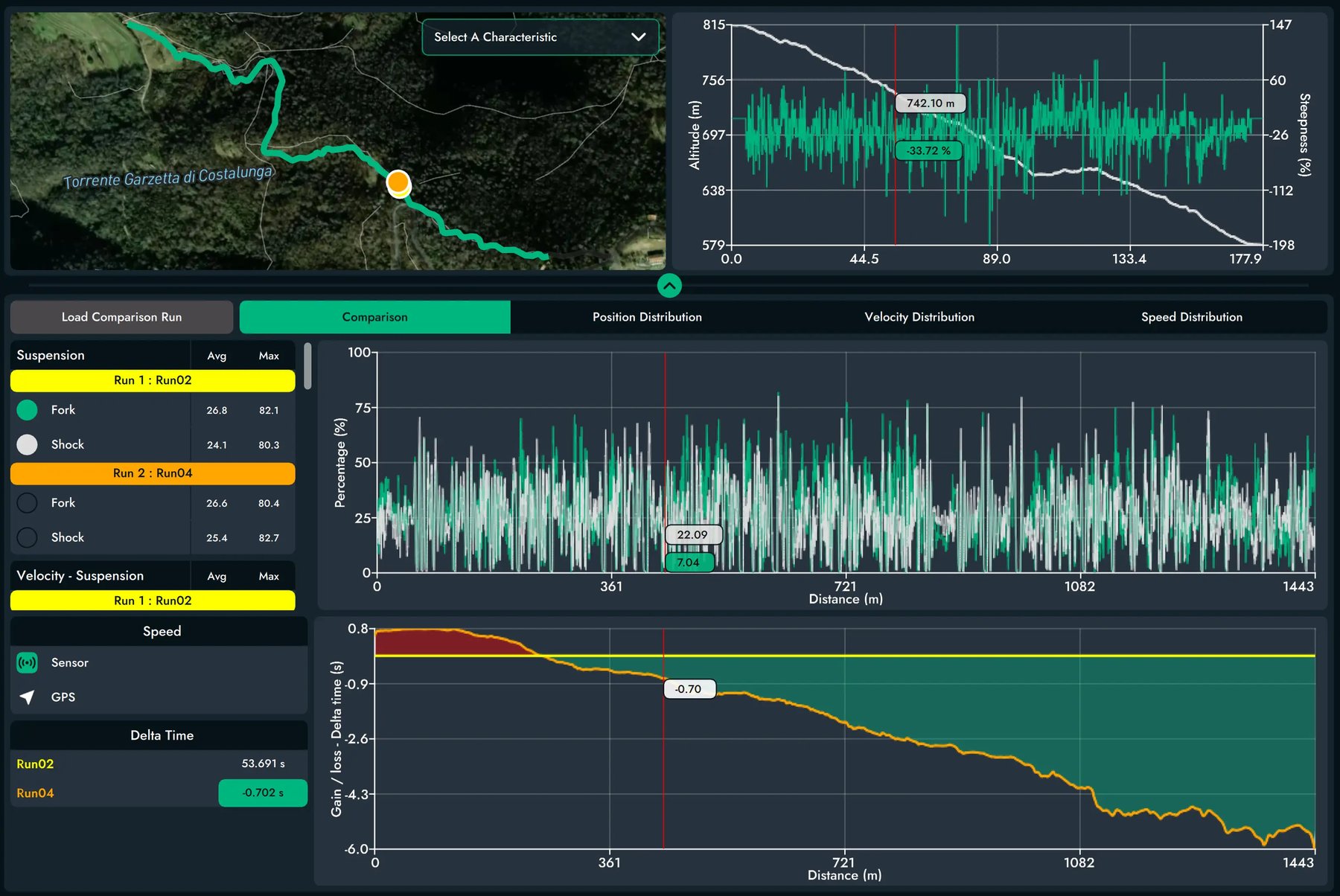
Data is used to identify where time is gained, lost, or simply being felt differently by the rider.
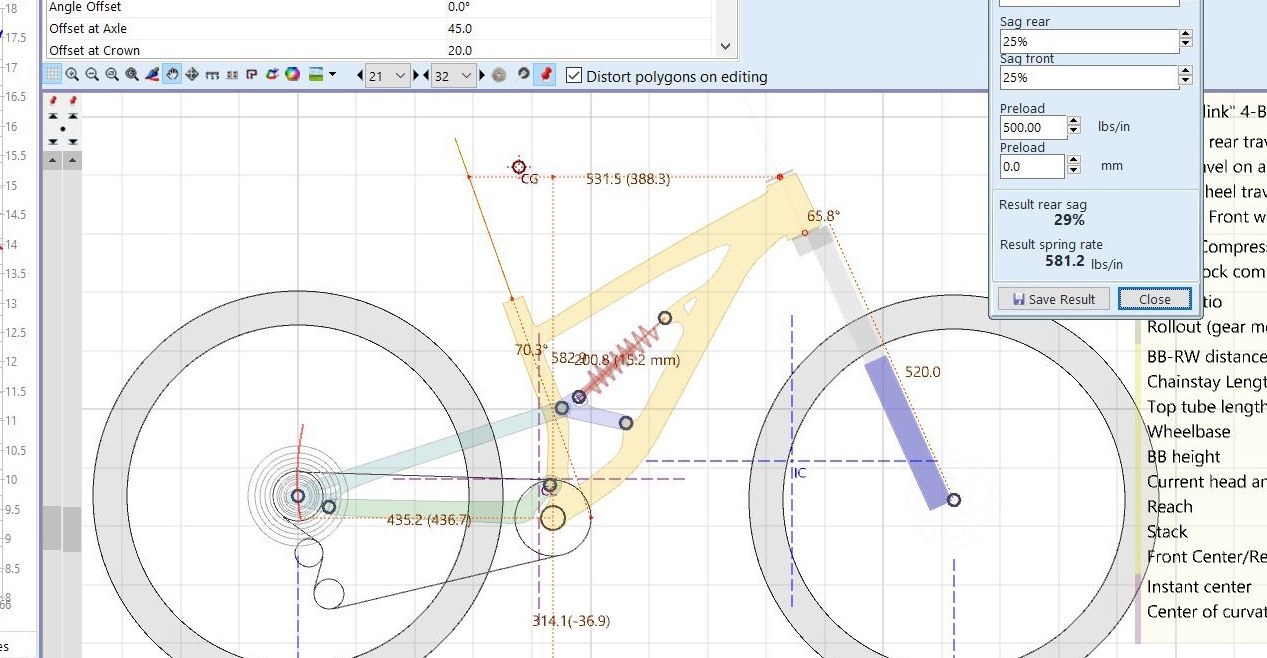
Leverage curves and geometry are considered before setup changes are treated as solutions.
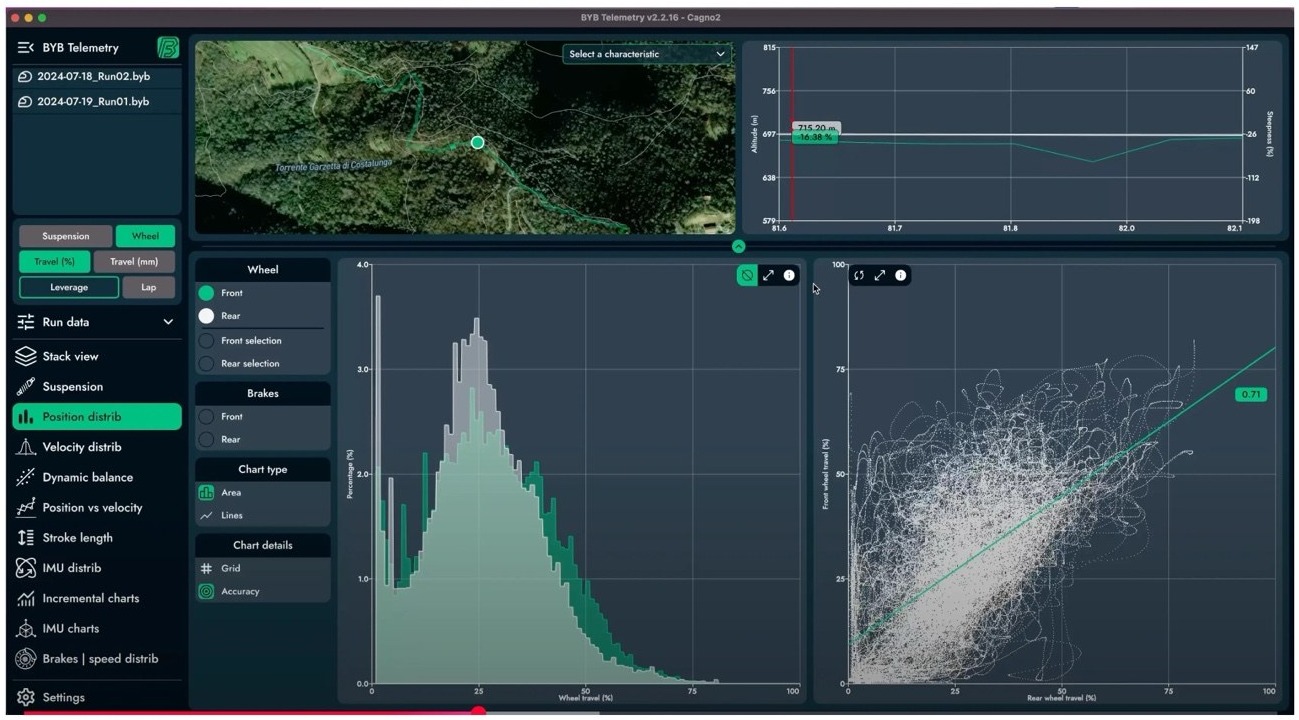
Suspension behaviour is reviewed against terrain, speed and rider input — feeding directly into setup changes the rider can feel on the next run.
FOUNDATION
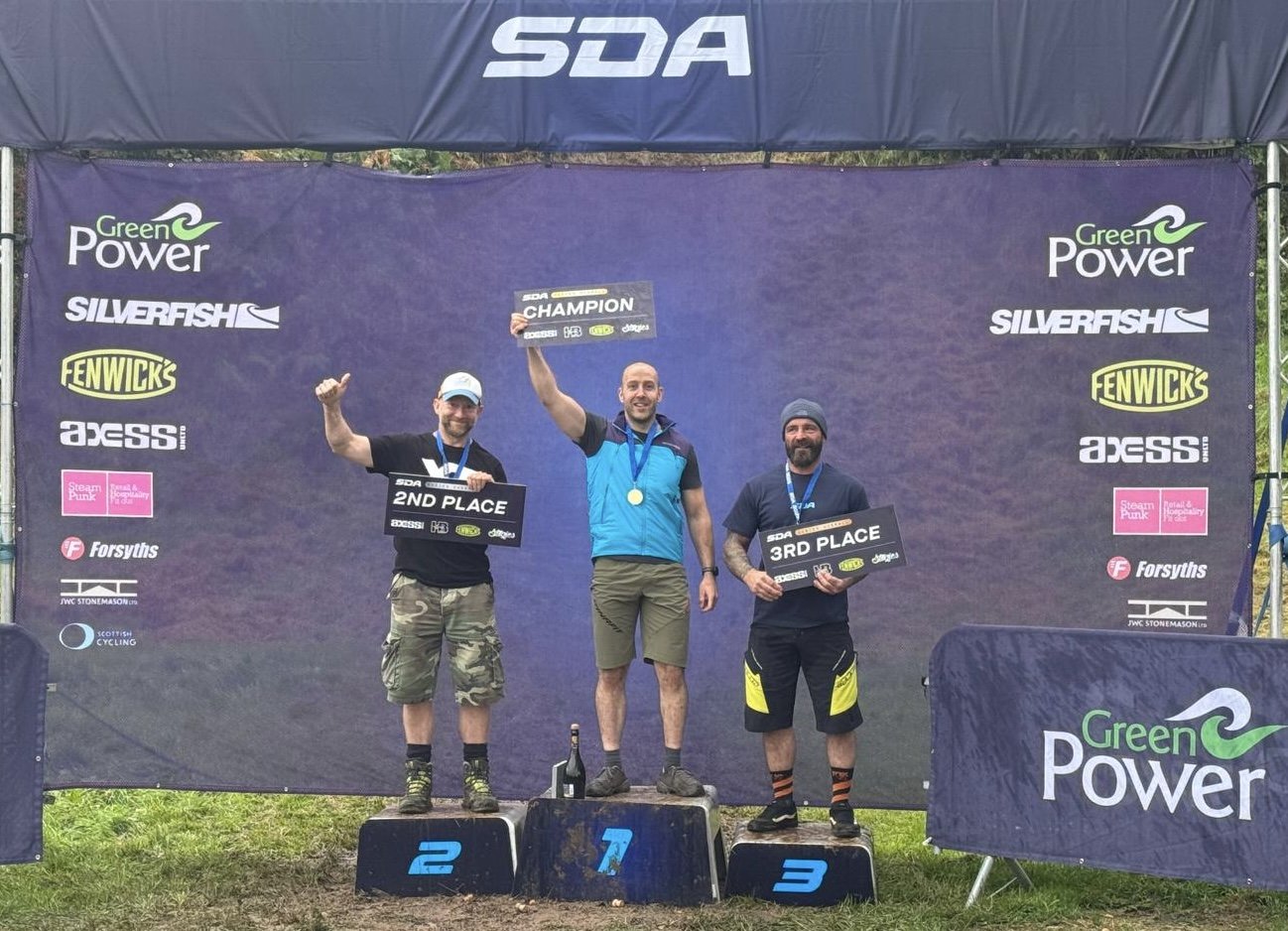
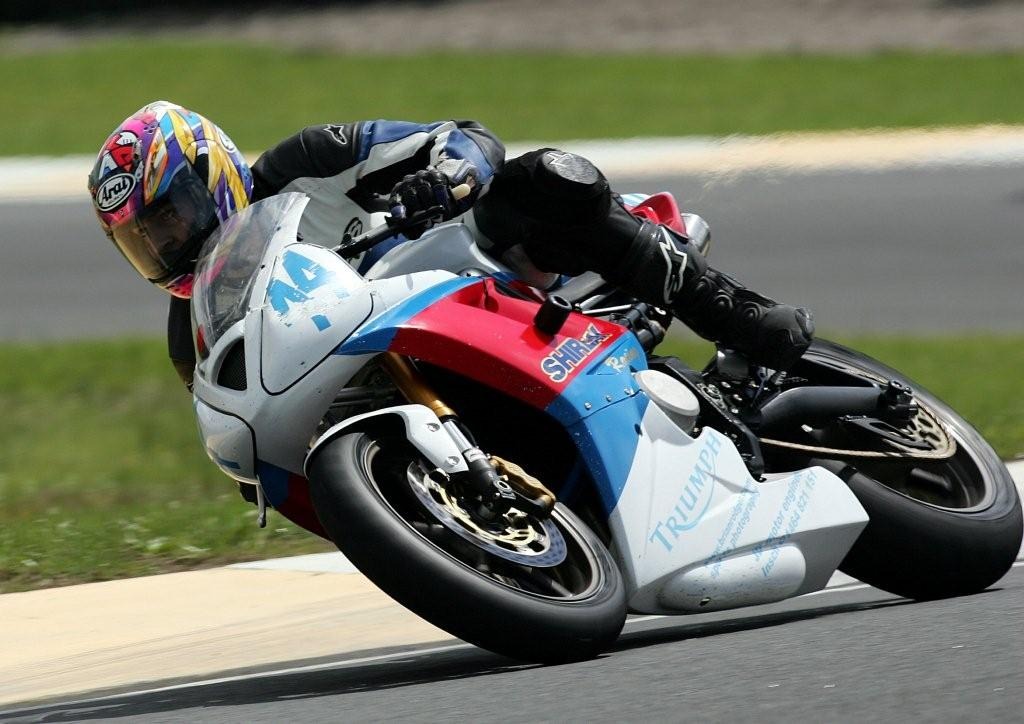
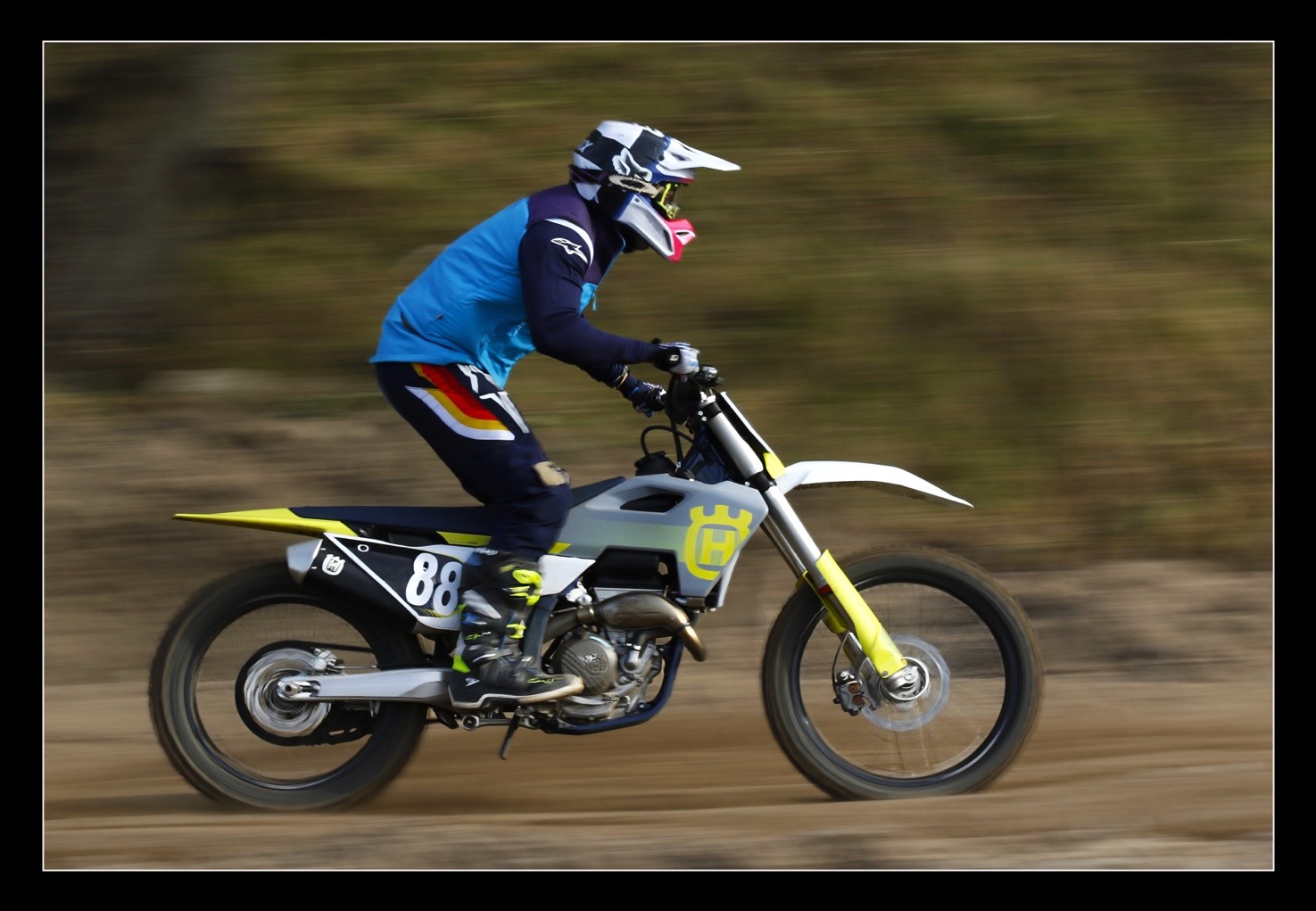
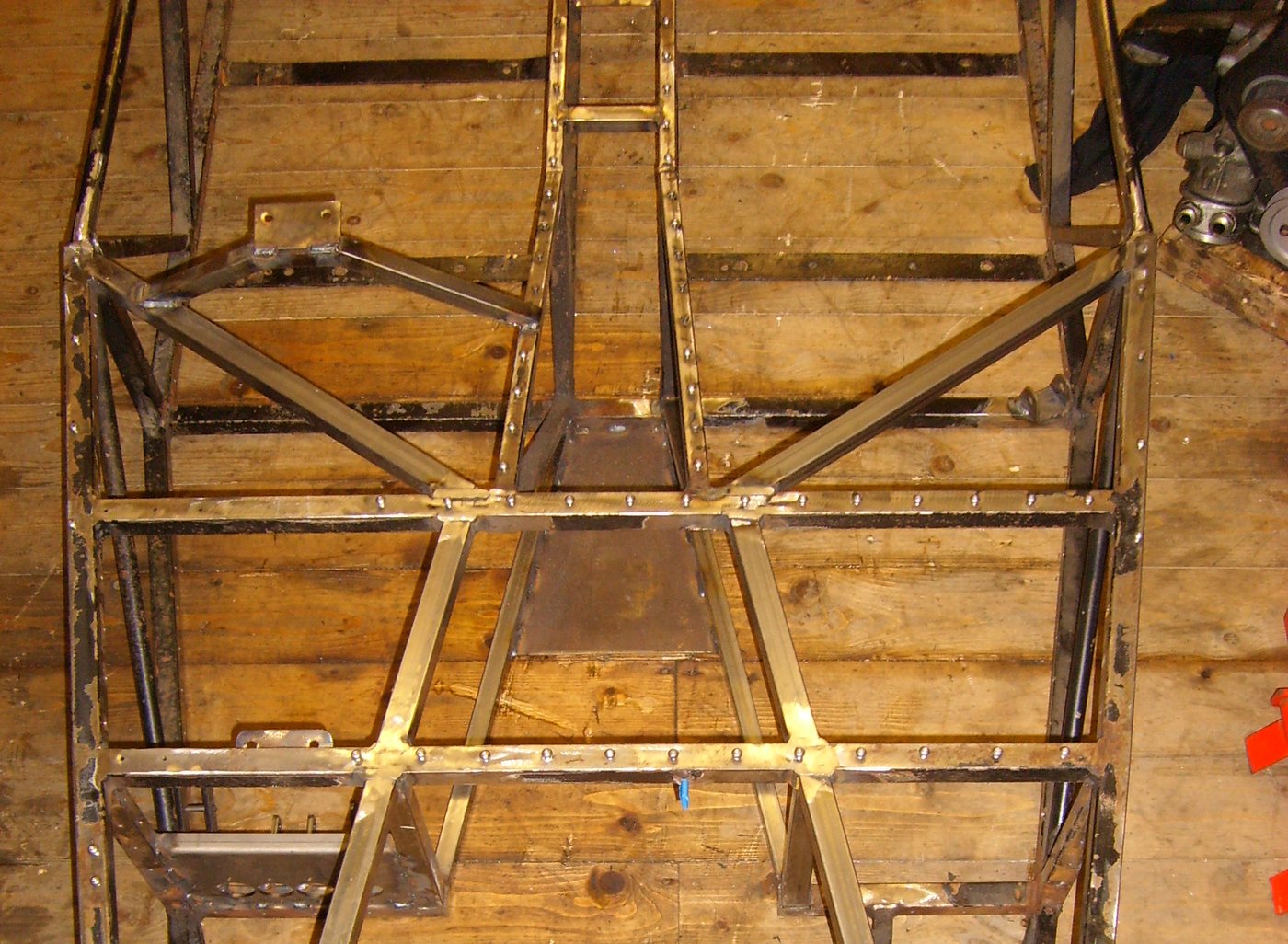
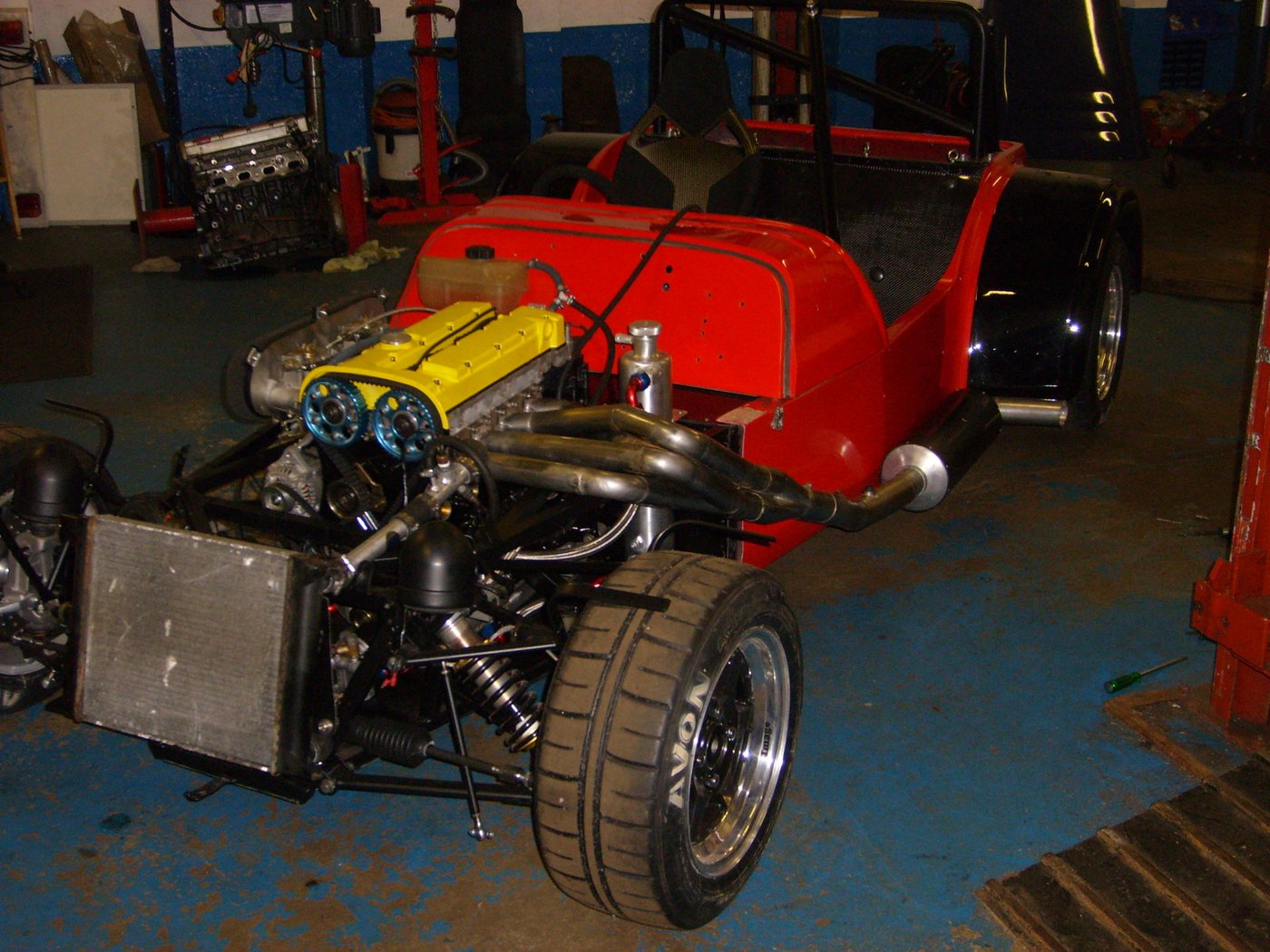
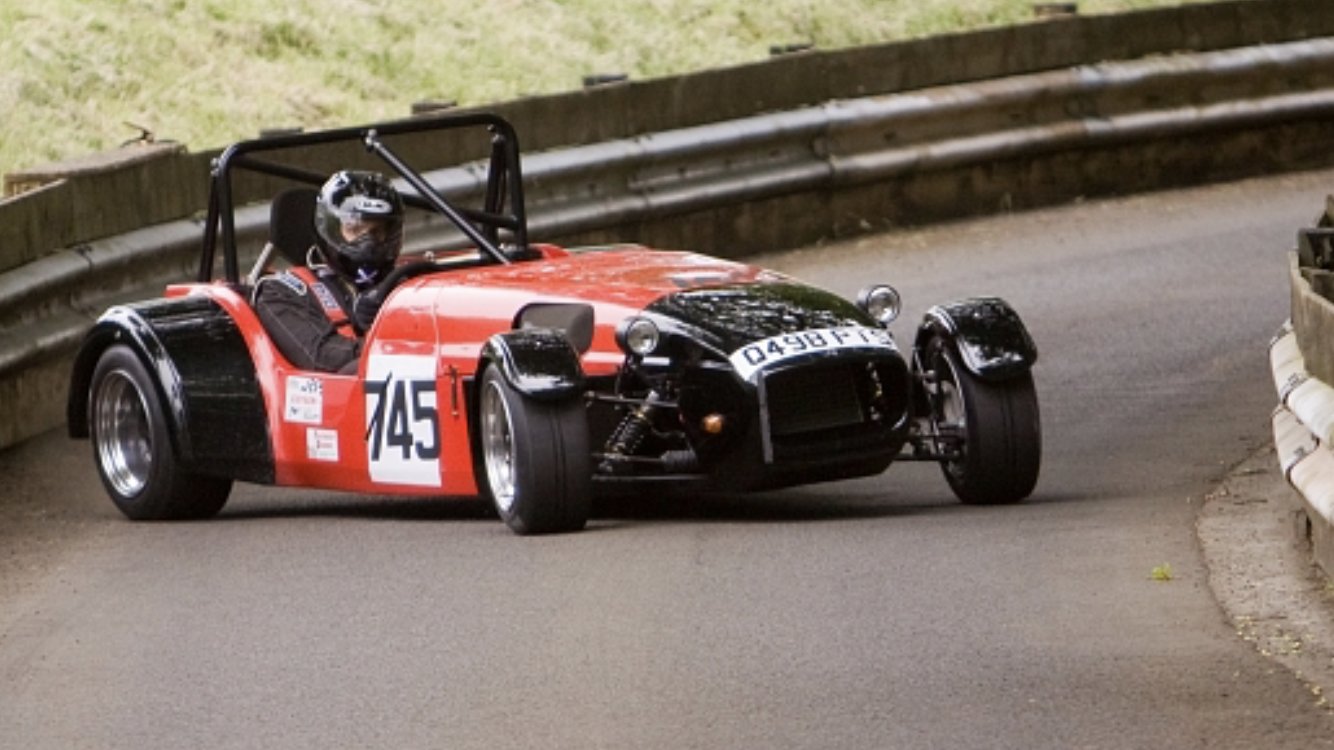
Thirty years in national-level competition across multiple disciplines, most recently Scottish Downhill Series Overall Champion (Masters 40). Experience also spans enduro and XC mountain biking, motorcycle circuit racing, motocross and enduro, and racing on four wheels in a self-built, open-top sports car.
Underneath the racing sits three decades in industrial automation — including roles at ExxonMobil and Total — that ground the data and analysis side of the work, alongside a first-class honours degree in psychology that underpins the human side. The aim is not simply to make riders faster, but to build clearer understanding between rider, machine, terrain and decision-making — the kind of understanding that holds up under pressure.
CONTACT
Coupled Systems works with a small number of riders each season. The approach depends on continuity — assessment, data, setup and coaching applied across training and racing rather than in isolation — so it isn't structured around one-off sessions.
If that fits how you want to work, the first step is an informal conversation — by email, phone or in person — to understand your season, your goals and what's currently in the way. If the approach is right for both of us, we'll talk about what an engagement looks like from there.
No obligation, and no expectation either way.
Or email directly: analysis@coupledsystems.co.uk